
A digital hologram is a visual projection that creates the illusion of a three-dimensional (3D) object appearing in real space. Unlike traditional screens, holograms can be seen from multiple angles and often appear to float, making them feel more lifelike and immersive.
But how do they work? While they may seem futuristic, the science behind interactive holograms is based on principles of light manipulation, projection mapping, and real-time animation. By carefully controlling how light is projected and reflected, digital holograms create the illusion of depth, movement, and even interactivity.
Brands are already using holograms to create interactive digital characters, live product demonstrations, and attention-grabbing experiences at trade shows and events. For where each actually fits, compare an AI character versus a hologram display. To help businesses understand the benefits of this technology, we’ll break down how they work, explain the key technologies behind them, and show how they can be integrated into live brand activations.
The Science Behind Interactive Holograms – How They Work
While many people associate holograms with science fiction, modern digital holography takes a different approach than traditional laser-based holograms to create immersive, interactive experiences.
The Three Main Types of Holograms
| Hologram Type | How It Works | Best For | Example |
| Pepper’s Ghost | Uses an angled transparent screen to reflect an image from a hidden display, creating a floating 3D illusion. | Stage presentations & keynote speeches – Ideal for virtual speakers and interactive brand mascots. | Used to “resurrect” Tupac at Coachella in 2012 and often seen in theatre productions and museum exhibits. |
| LED Fan Displays | A high-speed rotating LED fan flashes images in sequence, creating a floating 3D object. | Trade show booths & retail displays – Compact, eye-catching, and budget-friendly. | Commonly used in retail stores for product advertisements and in trade shows to create engaging, moving visuals. |
| Volumetric Projection | Multiple light sources and transparent screens create a full 3D holographic effect visible from multiple angles. | High-end brand activations & immersive experiences – The most realistic and premium option. | Used in luxury car showcases to present 3D models of new vehicles and in premium brand activations for an ultra-futuristic effect. |
Each of these technologies uses light behavior to create the illusion of depth and movement, making the experience more immersive.
Why Holograms Engage Audiences
The Science of Depth Perception
Human vision relies on stereoscopic depth cues, meaning our two eyes see slightly different images that our brain combines into a 3D perception. Holograms exploit this effect by using depth illusions, shadows, and movement.
Key Principles of Light Used in Digital Holograms
| Concept | How It Works in Holograms |
| Reflection | Light bounces off angled surfaces, creating mirror images (used in Pepper’s Ghost holograms). |
| Persistence of Vision | The brain processes fast-moving images as continuous motion (used in LED Fan Holograms). |
| Light Diffraction | Directs and bends light to create depth (used in Volumetric Projection). |
These optical tricks make flat projections appear 3D and allow holograms to feel more immersive and interactive.
How to Use Interactive Holograms in Marketing
Holograms are eye-catching, and that makes them a powerful tool for engaging audiences and driving brand recall. Choosing the right technology depends on your event goals.
LED Fan Displays are budget-friendly and eye catching but can only be viewed from certain angles. They are a great option for smaller events or product launches.
LED fans, like those produced by Hypervsn, are high resolution displays that deliver realistic visuals for events. One advantage of these displays are the high brightness – up to 3000 nits, which ensures visibility in even brightly-lit exhibition halls. The brightness even makes them suitable for outdoor use.
You could also use a Pepper’s Ghost technique, such as the modular holographic boxes offered by Mirage to really deliver a high impact, immersive experience. These modular displays can be used in events ranging from entertainment to professional presentations to educational settings.
To create an ultra premium activation Volumetric Projection delivers the most advanced experience, but, this comes with a cost.
Holograms can be combined with motion streaming, AI interactions, and real-time animation to create a fully interactive experience.
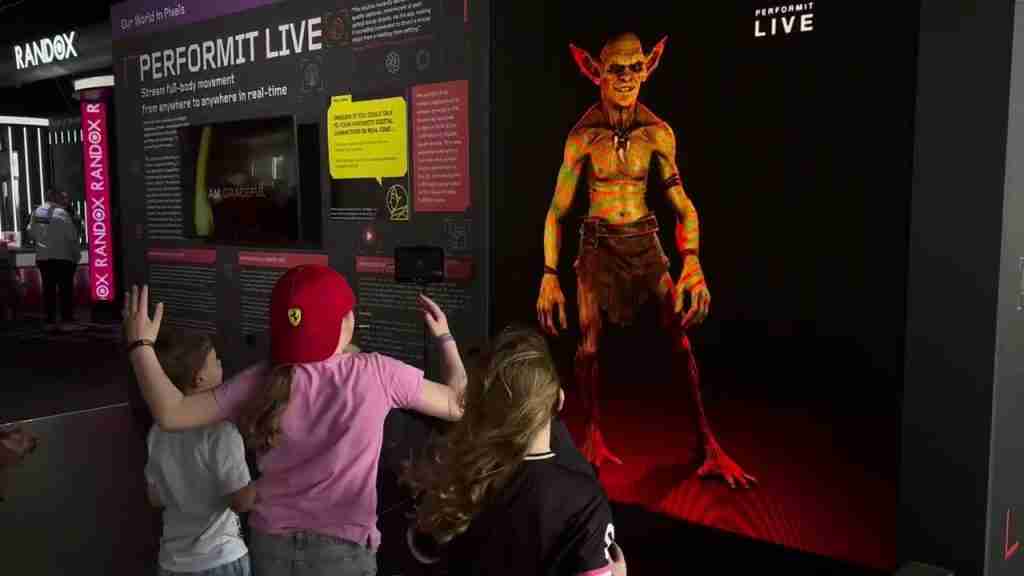
Case Study: Performit Live’s Camera One
Performit Live’s Camera One is an advanced real-time digital hologram system that allows brands to introduce live, interactive digital characters at events. Unlike pre-recorded animations, Camera One’s holograms are controlled in real time, allowing them to respond to audience interactions dynamically.
How Camera One Works
Live Motion Streaming – A human performer wears an advanced motion streaming suit, which tracks their body movements, facial expressions and hand gestures. These are translated into a digital avatar.
Real-Time Animation – The digital character is displayed as a live hologram, allowing for fluid, lifelike interactions.
Projected Display – The digital character appears on a transparent screen or Pepper’s Ghost-style reflection, creating a convincing 3D effect.
Two-Way Interaction – The digital character can see and hear the audience and vice versa enabling a two way conversation directly with the attendees.
Camera One enables brands to engage audiences in a way that feels personal and immersive, making it a powerful alternative to static presentations.
The Future of Holograms
As technology advances, holograms will become even more interactive, accessible, and lifelike. Key future developments include:
AI-Powered Holographic Avatars – Responsive, real-time characters capable of learning and adapting.
Augmented Reality (AR) Extensions – Allowing users to interact with holographic content via smartphones.
Hybrid Event Integration – Bridging physical and virtual experiences through real-time streaming holograms.
Brands that invest in holographic engagement today will be at the forefront of immersive experiential marketing.
Ready to Transform Your Live Events?
Holograms are a proven tool for increasing engagement, brand recall, and audience participation. Whether you’re launching a new product, exhibiting at a trade show, or running a live activation, digital holograms can set your brand apart.
Request a demo to see how Performit Live’s Camera One can elevate your next event.
Is your organisation ready to deploy an AI character?
Take the free AI Readiness Assessment. Score your venue on AI character readiness in 2 minutes. Personalised PDF report.