
Character-led engagement in a mature digital landscape
Digital tools are now well established within museums and heritage exhibitions. Interactive screens, audio interpretation, and responsive media are familiar elements across historic and military contexts.
The Waterloo Uncovered exhibition, delivered at the Royal Hospital Chelsea to mark the organisation’s tenth anniversary, was not conceived to replace these approaches, nor to correct a perceived gap. Instead, it explored whether a different kind of digital element could sit alongside them one centred on conversation, presence, and engagement rather than information delivery.
At the heart of Waterloo Uncovered’s work is a clear mission: involving military veterans directly in archaeological research and interpretation as a means of recovery, purpose, and contribution.
Unlike audio guides or interactive screens, the Coldstream Guard did not deliver pre-set content or guide visitors through a fixed narrative. He responded to visitors directly, allowing each exchange to unfold differently depending on what was asked.
The ambition to introduce a historical character visitors could speak to naturally, whose tone, appearance, and behaviour aligned fully with the exhibition’s research, subject matter, and curatorial intent.
The work followed a deliberate four-stage process: defining the character, establishing his story, curating how he could interact, and testing how he integrated into the museum experience.The result was an AI Coldstream Guard. Not a narrator. Not a performance. A character designed to support understanding through dialogue.
Part 1: Defining the Character
The process began by defining who this soldier was in practical, observable terms.
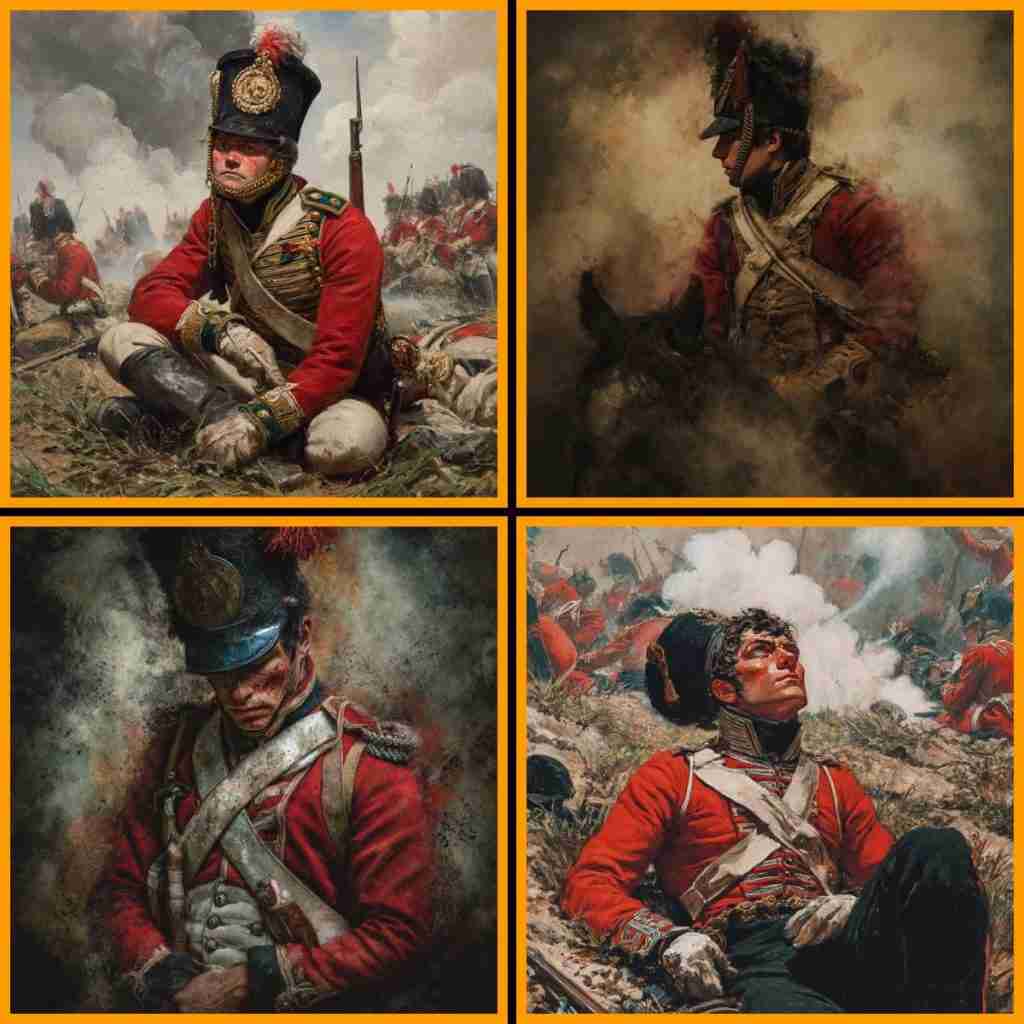
Mood boards were used to establish a shared visual and emotional language. These were working tools, used to explore posture, fatigue, restraint, and stillness rather than action or spectacle.
References deliberately avoided ceremonial or mythologised imagery. The intention was to depict a private soldier shaped by routine, weather, and lived experience.
Environmental references were developed in parallel, focusing on light, texture, and materiality so the character would sit comfortably within the exhibition rather than compete with surrounding artefacts.This stage also clarified what the character should not become. Theatricality, spectacle, and contemporary visual tropes were ruled out early, acting as guardrails for all later decisions.
Part 2: Creating His Story
With the character defined, attention turned to story — not as a script, but as a narrative foundation.
The character’s voice and perspective were grounded in the memoirs of Arthur Clay, who fought at Hougoumont Farm during the Battle of Waterloo. These first-hand accounts informed cadence, vocabulary, restraint, and point of view.
Rather than recounting events with hindsight, the character speaks from within experience. Memories are partial. Observations are personal. Some things are left unsaid.
Historical accuracy was treated as foundational rather than decorative. Uniform, equipment, and bearing were developed using primary reference photography from professional Napoleonic reenactors, whose kit had been researched and validated at regimental level.
A key collaborator during this stage was Clive, a military veteran and participant in the Waterloo Uncovered programme. His deep knowledge of the Battle of Waterloo informed uniform accuracy, daily routines, regimental detail, and the realities of lived military experience ensuring the character reflected practice as well as period.
The portrait was further grounded by placing the soldier beside a beech tree on the Waterloo battlefield itself one of only two surviving trees known to have stood during the battle. While the individual is interpretive, the place is not.

Using the visual language of the time
Rather than pursuing contemporary realism, the character was given a subtle painting-like quality, reflecting how Waterloo was visually understood in the decades following 1815.
For much of the nineteenth century, the battle was known through painting. These works shaped public memory by balancing observation with atmosphere, scale, and emotional weight.This visual logic extended to presentation. The display was set within a physical picture frame, allowing the screen to read as part of the exhibition’s painted works rather than a standalone digital installation. The effect was of a living painting one that could respond when addressed.
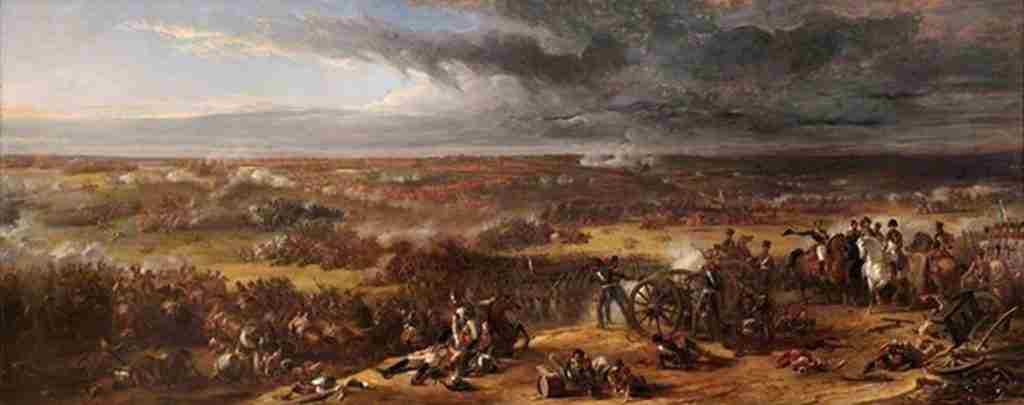
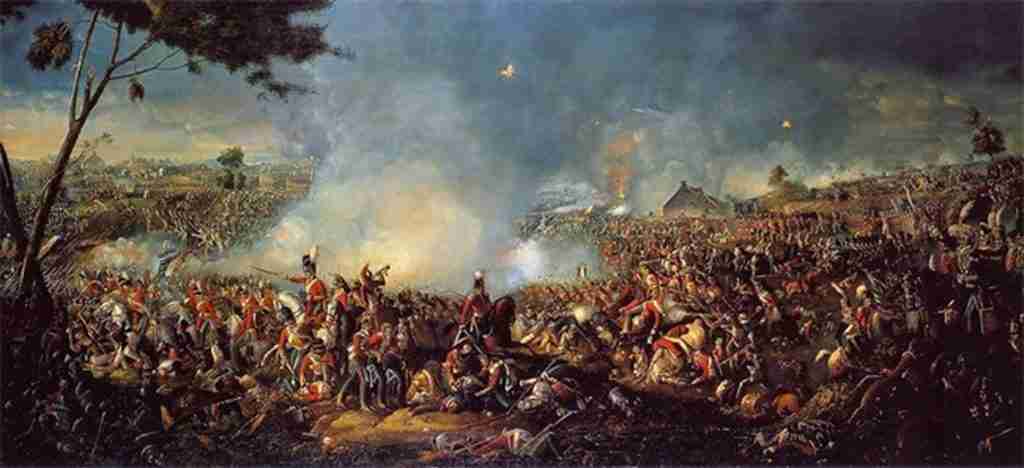
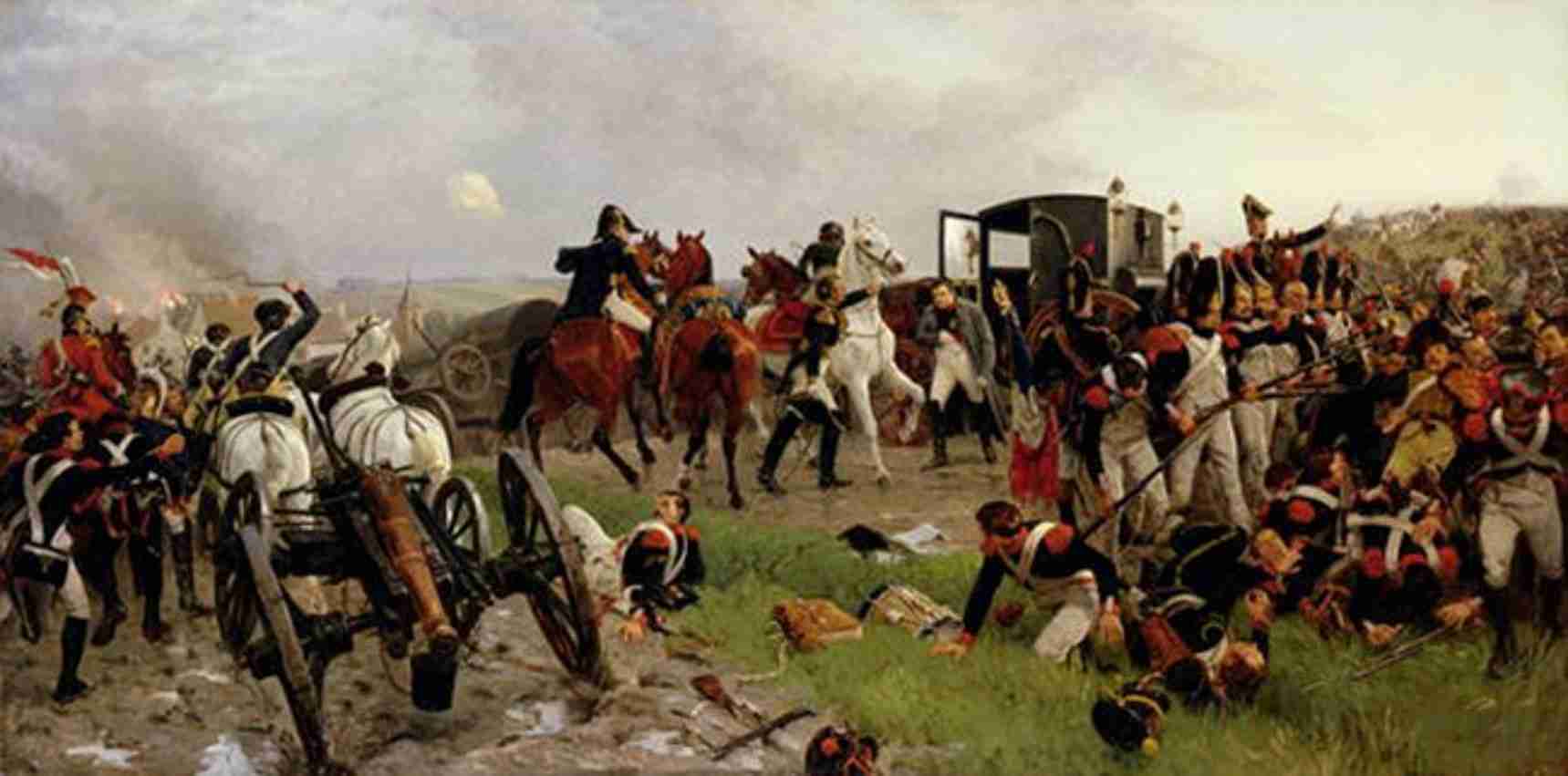
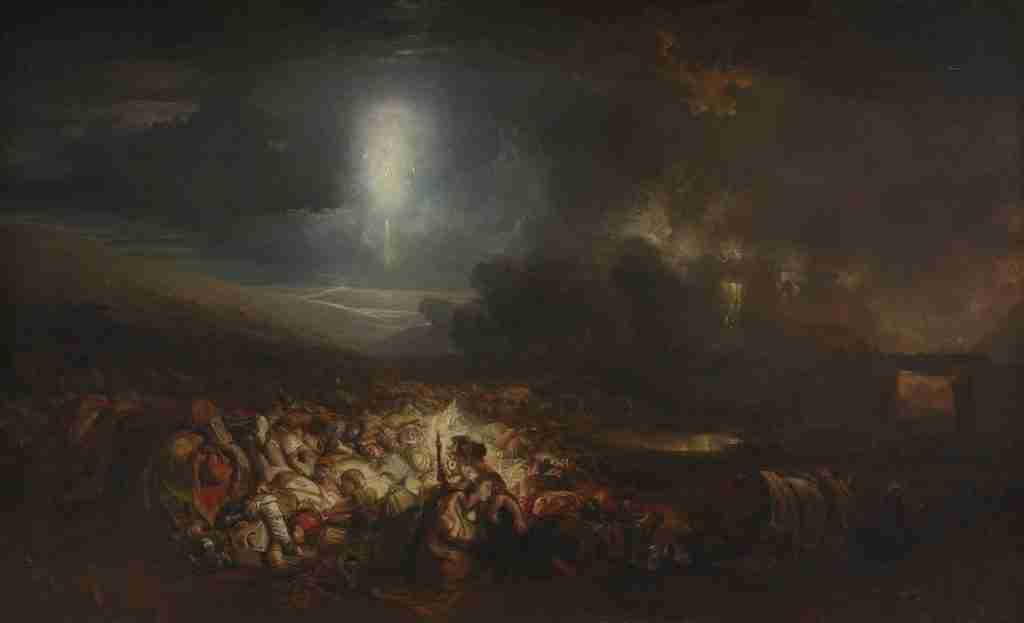
Image 3: Painting references that informed the character’s painterly treatment reflecting the nineteenth-century visual tradition through which Waterloo entered public consciousness.
Part 3: Defining and Curating Interaction
With the character defined visually and narratively, the next question was not what he should look like or sound like, but how he should behave when spoken to.
This was treated as a distinct stage of work. Rather than scripting, the team curated a credible interaction space shaped by the exhibition itself.
The character could speak about:
- Daily life as a Coldstream Guard
- Personal experience of combat at Hougoumont
- Fatigue, waiting, weather, and uncertainty
- Familiar routines, equipment, and formations
- Clear limits on what a private soldier would reasonably know
Tone was integral. Responses were measured and sometimes incomplete. Silence and uncertainty were allowed where appropriate.
The interaction layer was curated rather than automated, operating within boundaries set by the curatorial team. The standards behind that boundary-setting are set out in the curator’s checklist for a believable historical AI character.
Behind the scenes, the system recorded visitor questions. These were reviewed after the exhibition, allowing further responses to be added and ensuring the character evolved in response to real visitor curiosity.
Part 4: Production Testing and Integration into the Museum Experience
Only once character, story, and interaction were defined did the project move into production testing.
This phase focused on how the character functioned within the wider exhibition: how visitors encountered him, how long they stayed, and how conversation unfolded alongside artefacts and interpretation panels.
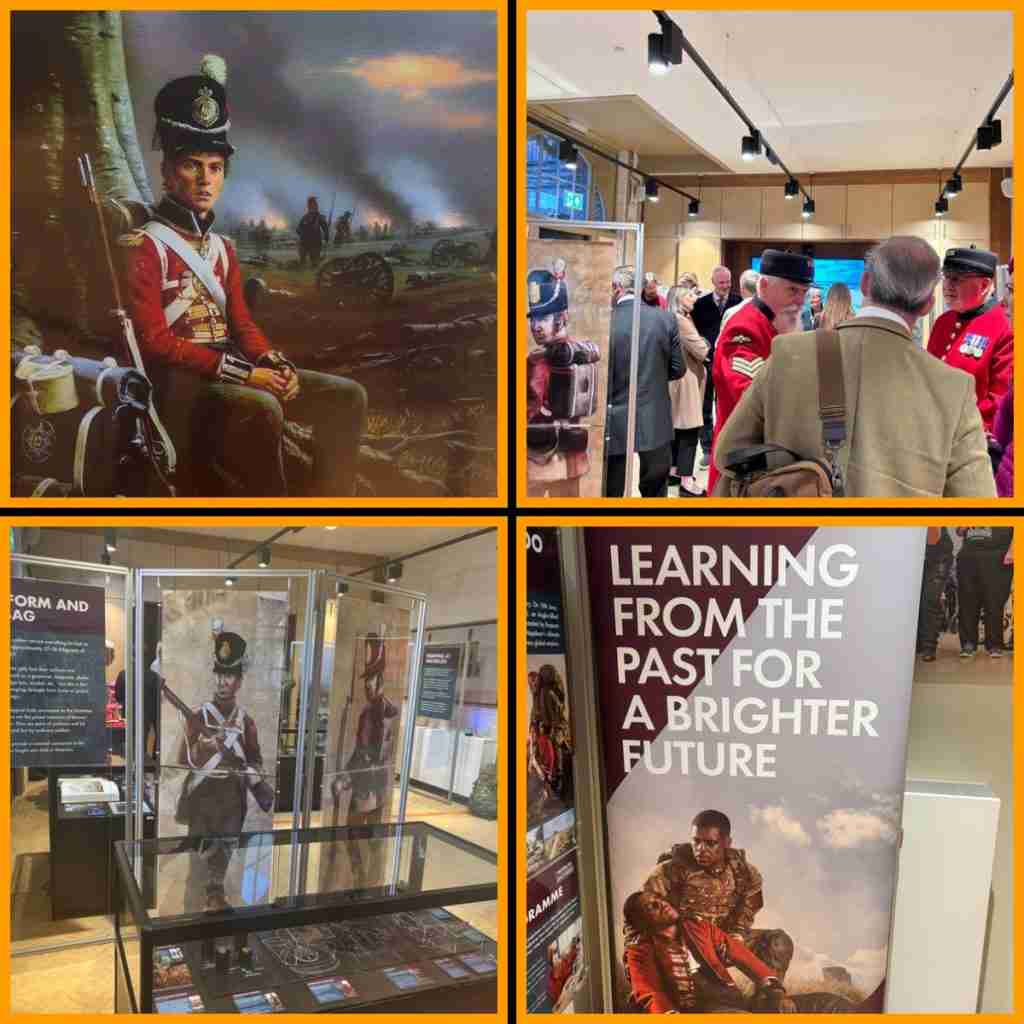
The framed presentation ensured the character blended seamlessly into the exhibition, reinforcing interpretation rather than signalling technology.
A new kind of engagement
What distinguished the Coldstream Guard was not technology, but behaviour.
He did not deliver content or guide visitors through a fixed narrative. He listened and responded. Visitors shaped the exchange.
For many visitors, the experience felt less like engaging with a digital installation and more like encountering a person momentarily present within the exhibition.
Video of the AI Coldstream Guard speaking with visitors in the Waterloo Uncovered exhibition, presented as a framed portrait and responding with period-appropriate tone.
Engagement was the measure of success.
I am writing to express my sincere thanks for all your hardwork throughout the Waterloo Solider project and during the exhibition weekend.
“Pvt Samuel Forstyth brought the exhibition to life and helped drive the strong level of visitor engagement over the two days. It has been an absolute joy to see Performit Live in action, and we are all in agreement tha this is the future of heritgae spaces.”


Why this matters beyond Waterloo Uncovered
Designed for a tenth-anniversary exhibition at the Royal Hospital Chelsea, the AI Coldstream Guard was shaped by the expectations that come with both heritage and commemoration.
What this project demonstrates is not a specific technology, but an approach. When behaviour, tone, and context are treated as carefully as visual accuracy, digital characters can operate as part of interpretation rather than as an add-on.
The lessons here about restraint, curation, and integration are transferable to other exhibitions, collections, and cultural settings.
Closing reflection
The AI Coldstream Guard was designed to sit comfortably within the Waterloo Uncovered exhibition answering questions, acknowledging limits, and remaining consistent with the research and artefacts around him.
That outcome came from discipline rather than novelty: mood boards, memoirs, reenactor reference, battlefield context, painterly visual language, curated interaction, and careful integration into the museum experience.
When these elements align, digital characters can extend how exhibitions engage audiences not by drawing attention to themselves, but by supporting meaningful encounters with the past.
If you are exploring character-led digital experiences within museums or cultural attractions, the Waterloo Uncovered project offers a grounded reference for how such work can be approached.
Is your organisation ready to deploy an AI character?
Take the free AI Readiness Assessment. Score your venue on AI character readiness in 2 minutes. Personalised PDF report.